
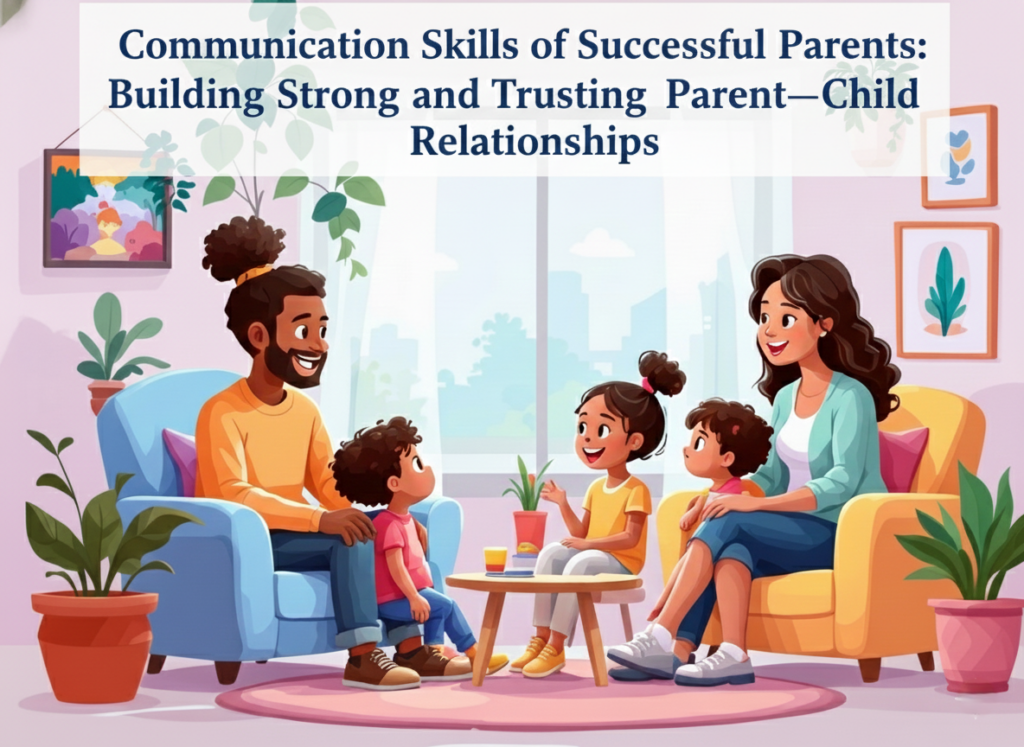
Effective communication is one of the strongest foundations of good parenting. Successful parents understand that communication is not just about giving instructions—it is about listening, understanding, and connecting with their children. The way parents communicate directly influences a child’s confidence, emotional health, and behavior.
Strong communication skills help parents build trust, resolve conflicts peacefully, and guide children through challenges with care and clarity.
👉 Good Parents: Building Strong Foundations for Children’s Success
Why Communication Matters in Parenting
Children need to feel heard and understood. When parents communicate openly, children feel safe sharing their thoughts, fears, and mistakes.
Good communication:
- Strengthen emotional bonds
- Reduces misunderstandings
- Builds trust and respect
- Encourages emotional expression
Children who grow up in communicative homes develop better social and emotional skills.
Active Listening: The Foundation of Good Communication
Successful parents practice active listening. They give full attention to their child without interrupting or judging.
Active listening includes:
- Maintaining eye contact
- Allowing children to finish speaking
- Responding calmly and thoughtfully
When children feel listened to, they are more likely to communicate openly.
Speaking with Respect and Calmness
The tone parents use matters as much as the words. Successful parents speak respectfully, even during disagreements.
Calm communication:
- Reduces fear and anxiety
- Encourages problem-solving
- Models respectful behavior
Children learn how to communicate by observing their parents.
Encouraging Open Expression of Feelings
Good parents create an environment where children can express emotions freely.
They:
- Validate feelings
- Avoid mocking or dismissing emotions
- Encourage healthy emotional expression
This helps children develop emotional intelligence and confidence.
Age-Appropriate Communication
Successful parents adapt communication according to the child’s age and understanding.
- Younger children need simple explanations
- Older children benefit from discussions and reasoning
Age-appropriate communication helps children understand expectations clearly.
Using Positive Language
Positive language motivates children more effectively than criticism.
Successful parents:
- Focus on solutions, not blame
- Use encouraging words
- Avoid negative labels
Positive communication improves behavior and self-esteem.
Handling Conflicts Through Healthy Dialogue
Conflicts are natural, but how parents handle them matters.
Good parents:
- Address issues calmly
- Encourage discussion
- Teach problem-solving skills
Healthy conflict resolution builds mutual respect.
Non-Verbal Communication and Body Language
Children are sensitive to non-verbal cues.
Successful parents use:
- Supportive facial expressions
- Gentle gestures
- Reassuring body language
Non-verbal communication strengthens emotional connection.
Encouraging Questions and Curiosity
Good communication encourages children to ask questions without fear.
Successful parents:
- Welcome curiosity
- Answer honestly
- Encourage exploration
This builds confidence and a love for learning.
Maintaining Consistent Communication
Consistency in communication helps children feel secure.
Regular conversations:
- Strengthen bonds
- Help identify issues early
- Promote emotional stability
Consistent communication builds trust over time.
Conclusion
Communication skills are at the heart of successful parenting. By listening actively, speaking respectfully, encouraging emotional expression, and maintaining open dialogue, parents create strong and trusting relationships with their children.
Successful parents communicate not to control, but to connect, guide, and support. Strong communication builds confident, emotionally healthy children prepared for life’s challenges.