
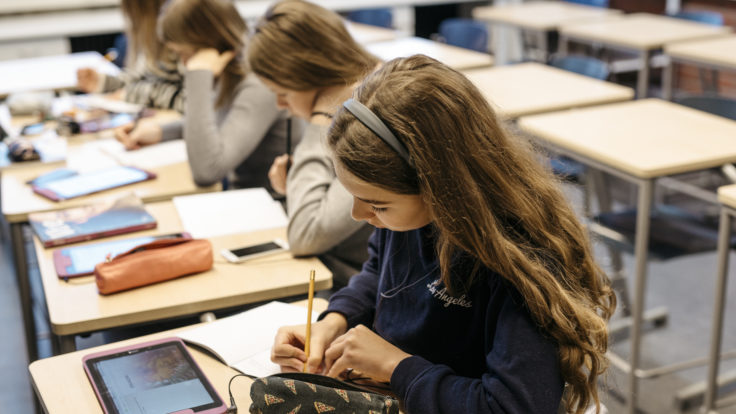
Finland is widely regarded as one of the world’s most successful education systems — not because of long study hours or heavy homework, but because of its student-centric teaching philosophy. Finnish schools focus on nurturing curiosity, understanding, and emotional well-being, ensuring students enjoy learning while achieving strong academic outcomes.
This approach offers valuable lessons for Indian schools looking to move beyond rote memorization and exam pressure.
What Makes Finland’s Education System Unique?
Unlike traditional education models that prioritize scores and competition, Finland’s system is designed around the learning needs of the child. The emphasis is on quality learning experiences rather than quantity of work.
Three core pillars define Finland’s success:
- Minimal homework
- High teacher autonomy
- Learning driven by curiosity
Minimal Homework: Learning Happens Best in the Classroom
Finnish students receive very little homework compared to students in many other countries. Instead, learning is completed during school hours, with teachers ensuring that students fully understand concepts before moving on.
Benefits:
- Reduced stress and burnout
- Better focus during class
- More time for creativity, play, and family
Indian School Adaptation:
Indian schools can reduce excessive homework and focus on:
- Meaningful classwork
- Practice-based learning inside classrooms
- Homework designed for revision, not repetition
This supports a healthier balance between academics and personal development.
Teacher Autonomy: Empowering Educators to Teach Better
In Finland, teachers are trusted professionals. They are given the freedom to:
- Design lesson plans
- Choose teaching methods
- Adapt content based on student needs
This autonomy allows teachers to focus on effective learning rather than rigid syllabus completion.
Indian School Adaptation:
Indian schools can empower teachers by:
- Encouraging flexible teaching methods
- Reducing one-size-fits-all lesson structures
- Allowing innovation in classrooms
This aligns closely with modern teacher development practices, discussed further in Teacher Training Models from Top Education Systems Around the World.
Learning Through Curiosity, Not Fear
Finnish classrooms are designed to spark curiosity. Students are encouraged to ask questions, explore topics, and learn through discussion rather than memorization.
Key methods include:
- Interactive classroom activities
- Group discussions
- Problem-solving tasks
Indian School Adaptation:
Indian schools can move toward activity-based learning by:
- Using real-life examples
- Encouraging classroom interaction
- Shifting from rote memorization to concept clarity
This approach also complements Project-Based Learning approaches used globally, which are explored in Project-Based Learning in the US: Encouraging Creativity and Critical Thinking.
How Student-Centric Learning Improves Academic Outcomes
Despite fewer exams and less homework, Finnish students consistently perform well in global assessments. This proves that:
- Deep understanding beats surface learning
- Motivation improves retention
- Happy students learn better
When students enjoy learning, academic performance naturally improves.
Blending Finland’s Model with the Indian Education System
Indian schools do not need to copy Finland’s system entirely. Instead, they can adapt its core principles:
- Focus on understanding over memorization
- Reduce unnecessary academic pressure
- Encourage curiosity-led learning
When combined with Indian values, discipline, and curriculum standards, this model creates a balanced and future-ready education system.
Final Thoughts
Finland’s student-centric teaching model reminds us that education is not about producing top scorers — it is about nurturing confident, curious, and capable learners.
Indian schools that adopt activity-based learning, empowered teaching, and curiosity-driven classrooms take a powerful step toward meaningful education reform.