
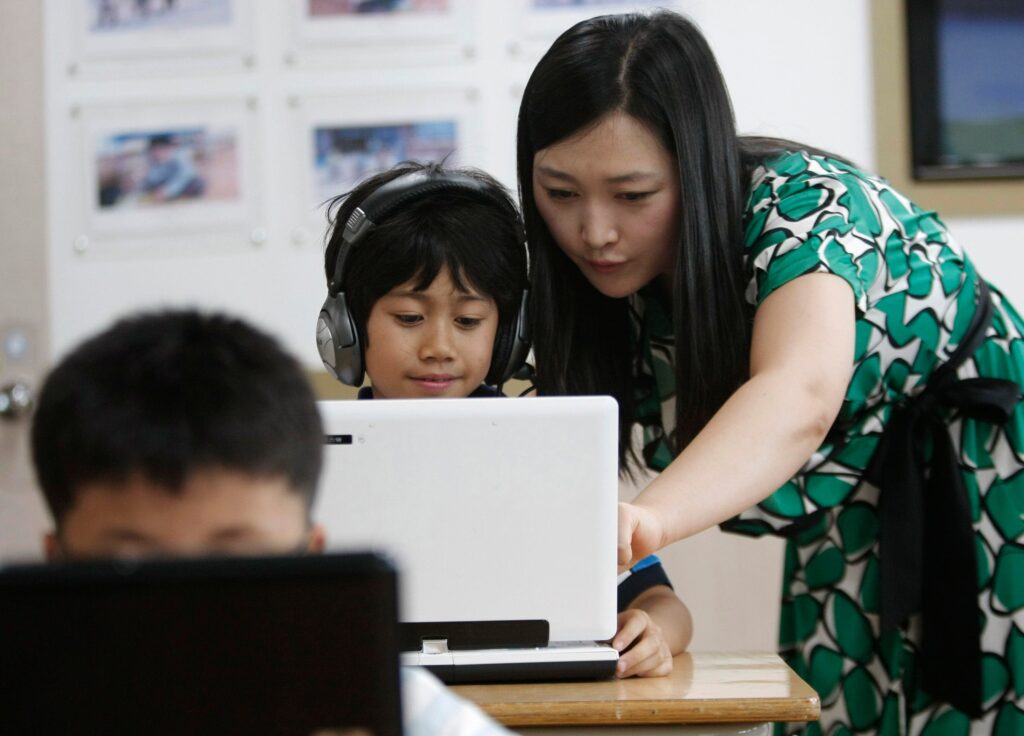
As education evolves in the digital age, South Korea has emerged as a global leader in technology-integrated classrooms. Rather than replacing teachers, South Korean schools use technology as a powerful support system to improve concept clarity, personalize learning, and prepare students for a tech-driven future.
For Indian schools, South Korea’s digital education model offers practical lessons on how to blend innovation with discipline, values, and strong academic foundations.
What Are Technology-Integrated Classrooms?
Technology-integrated classrooms combine traditional teaching methods with digital tools to enhance learning outcomes. In South Korea, this includes:
- Smart boards and interactive displays
- Digital textbooks and learning platforms
- Online assessments and feedback systems
This approach keeps classrooms engaging while ensuring teachers remain central to the learning process. It closely supports student-centric teaching philosophies, similar to those discussed in How Finland’s Student-Centric Teaching Model Improves Learning Outcomes.
Why South Korea’s Digital Education Model Works
South Korea’s success lies in intentional and structured use of technology. Instead of excessive screen time, schools focus on:
- Clear learning objectives
- Concept reinforcement through visuals and simulations
- Data-driven insights into student performance
Technology is used to improve understanding — not distract from it.
Blended Learning: The Core of South Korea’s Classrooms
One of the strongest elements of South Korea’s system is blended learning, where:
- Teachers explain concepts in person
- Digital tools reinforce learning
- Students revise at their own pace
This approach strongly supports mastery-based learning systems like Singapore’s, explored in Singapore’s Mastery-Based Learning: Teaching for Understanding, Not Just Exams, where students progress only after achieving clarity.
Supporting Personalized Learning Through Technology
Digital platforms in South Korean schools help teachers:
- Track individual student progress
- Identify learning gaps early
- Provide targeted feedback
This enables personalized learning approaches, similar to those practiced in Personalized Learning Approaches Used in European Schools, ensuring every student receives the support they need.
Enhancing Project-Based and Activity-Based Learning
Technology plays a major role in enabling:
- Research-based projects
- Collaborative group work
- Creative presentations
This strengthens project-based learning environments, discussed in Project-Based Learning in the US: Encouraging Creativity and Critical Thinking, while also supporting activity-based learning inspired by Finland.
Digital Assessments Without Academic Pressure
South Korean schools use digital assessments to:
- Monitor understanding continuously
- Reduce dependence on high-stakes exams
- Improve teaching strategies
This approach aligns well with student-centric and mastery-based education philosophies, helping students focus on learning rather than fear of failure.
Maintaining Discipline and Values in Digital Classrooms
Despite high technology usage, South Korean schools place strong emphasis on:
- Discipline
- Responsibility
- Respectful behavior
Students are taught digital responsibility and etiquette, echoing the values promoted in Japan’s Moral Education System: Building Discipline, Responsibility & Teamwork.
Role of Teachers in Technology-Enabled Education
Technology-integrated classrooms succeed only when teachers are confident and well-trained. South Korea invests heavily in:
- Digital pedagogy training
- Blended learning strategies
- Continuous professional development
This reinforces the importance of Teacher Training Models from Top Education Systems Around the World, where educators are prepared to adapt to evolving teaching methods.
How Indian Schools Can Adapt South Korea’s Model
Indian schools can adopt this model by:
- Using smart boards for complex concepts
- Introducing digital tools for formative assessments
- Maintaining balanced screen-time with teacher-led instruction
Technology should always support:
- Concept clarity
- Engagement
- Personalized learning
—not replace teachers or classroom interaction.
Building a Holistic Global Learning Environment
Technology-integrated classrooms work best when combined with:
- Student-centric learning from Finland
- Mastery-based education from Singapore
- Moral and value education from Japan
- Project-based learning from the US
- Personalized learning from Europe
- Continuous teacher training programs
Together, these approaches define the vision outlined in Global Teaching Methods That Are Transforming Education — And How Indian Schools Can Adapt Them.
Final Thoughts
South Korea’s digital education system proves that technology is most effective when used with purpose and balance. When thoughtfully integrated, it enhances learning without compromising discipline, values, or teacher involvement.
Indian schools that embrace technology-integrated classrooms — alongside student-centric education, mastery-based learning, moral development, personalized teaching, project-based learning, and strong teacher training — prepare students for a future that is both digital and deeply human.