
Education is not only about academic achievement; it is about shaping responsible, kind, and confident individuals. Strong values learned during school years influence how children think, behave, and interact with the world around them. This is why moral science and value education play a vital role in a child’s overall development.
As part of holistic education, values are not treated as a separate subject but are woven naturally into daily learning experiences. This approach helps students understand and practice good values in real-life situations.
Why Moral Science Is Important in School Education
Moral science helps children understand the difference between right and wrong. It guides them to make thoughtful decisions, respect others, and take responsibility for their actions. At a young age, children are highly impressionable, making it the best time to instill positive habits and ethical thinking.
When moral education is introduced early, students grow into disciplined, empathetic, and socially aware individuals.
Learning Values Through Stories and Discussions
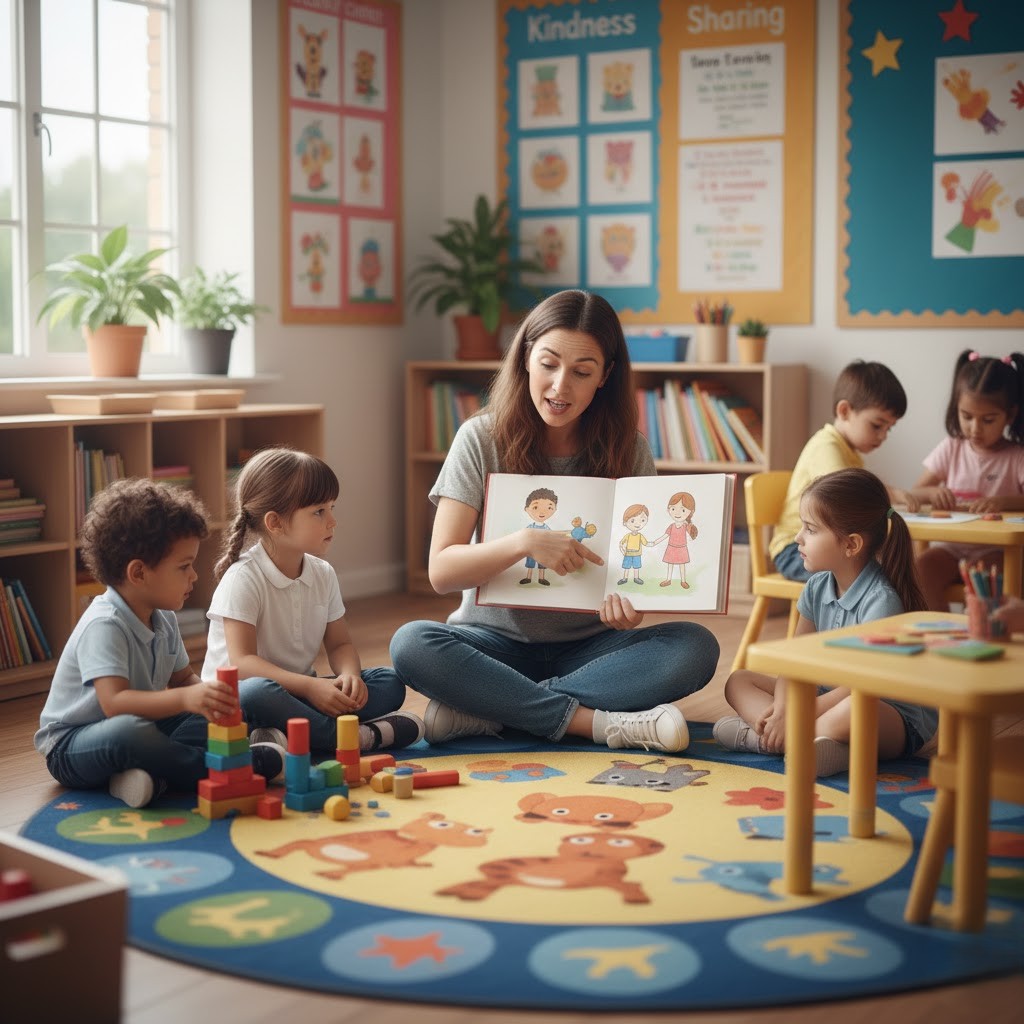
Stories have a powerful impact on young minds. Moral stories, real-life examples, and age-appropriate discussions help students relate values to everyday life. Through storytelling, children learn lessons about honesty, kindness, courage, and respect in a way that is engaging and easy to understand.
Classroom discussions encourage students to share their thoughts, listen to others, and develop emotional intelligence.
Values Practiced Through Daily Classroom Activities
Values are best learned through action, not memorization. Simple classroom activities such as group work, helping peers, following rules, and completing responsibilities teach discipline, teamwork, and accountability.
Teachers guide students to practice:
- Honesty in their work
- Respect for teachers and classmates
- Responsibility for their belongings
- Cooperation during group activities
These daily practices help values become a natural part of a child’s behavior.
Encouraging Empathy and Respect
Empathy is the ability to understand and care about others’ feelings. Through role-play, group discussions, and guided interactions, students learn to appreciate different perspectives and respect diversity.
By encouraging polite communication and positive behavior, schools create a supportive environment where every child feels valued.
Discipline as a Life Skill, Not Punishment
Discipline is taught as self-control and responsibility rather than fear of punishment. Clear routines, consistent expectations, and positive reinforcement help students understand the importance of discipline in daily life.
This approach builds self-confidence and helps children develop inner motivation to do the right thing.
Learning Values Beyond the Classroom
Moral education extends beyond textbooks. Assemblies, group activities, celebrations, and community interactions reinforce values such as cooperation, gratitude, and social responsibility.
These experiences help students apply classroom lessons to real-world situations, strengthening their moral foundation.
Role of Teachers as Role Models
Teachers play a crucial role in shaping student behavior. By demonstrating fairness, patience, and respect, teachers become role models whom students naturally follow.
Positive teacher-student relationships help children feel safe, understood, and motivated to adopt good values.
How Value Education Supports Academic and Personal Growth
Students with strong moral values tend to be more focused, disciplined, and confident. Value-based education improves classroom behavior, strengthens peer relationships, and creates a positive learning environment.
These qualities support both academic success and personal growth, preparing students for future challenges.
Conclusion: Shaping Character for Life
Building character is a continuous process that begins early and grows stronger with daily practice. By integrating moral science and values into everyday learning, schools help students develop honesty, discipline, empathy, and responsibility.
Such value-based education ensures that children grow not only into successful students but also into good human beings—ready to face life with confidence, integrity, and compassion.
know more 👉 Holistic Growth & Community Life: Nurturing Life Skills, Values, and Community Connections in School