
Peer pressure is a common experience for students, especially during school years when friendships and social acceptance feel very important. Almost every student faces situations where they feel influenced by friends or classmates to act, think, or behave in a certain way. While peer pressure is not always bad, learning how to handle it wisely is essential for a happy, confident, and successful school life.

What is Peer Pressure?
Peer pressure is the influence that people of the same age group have on one another. It happens when students feel pushed to follow what their friends or classmates are doing—whether it is related to behavior, appearance, habits, or choices.
Peer pressure can be of two types:
- Positive peer pressure: Encourages good habits, such as studying together, joining sports, participating in competitions, or developing healthy routines.
- Negative peer pressure: Pushes students toward unhealthy or wrong choices, like skipping classes, cheating in exams, lying to parents, bullying others, or trying harmful habits.
Understanding the difference between the two helps students make better decisions.

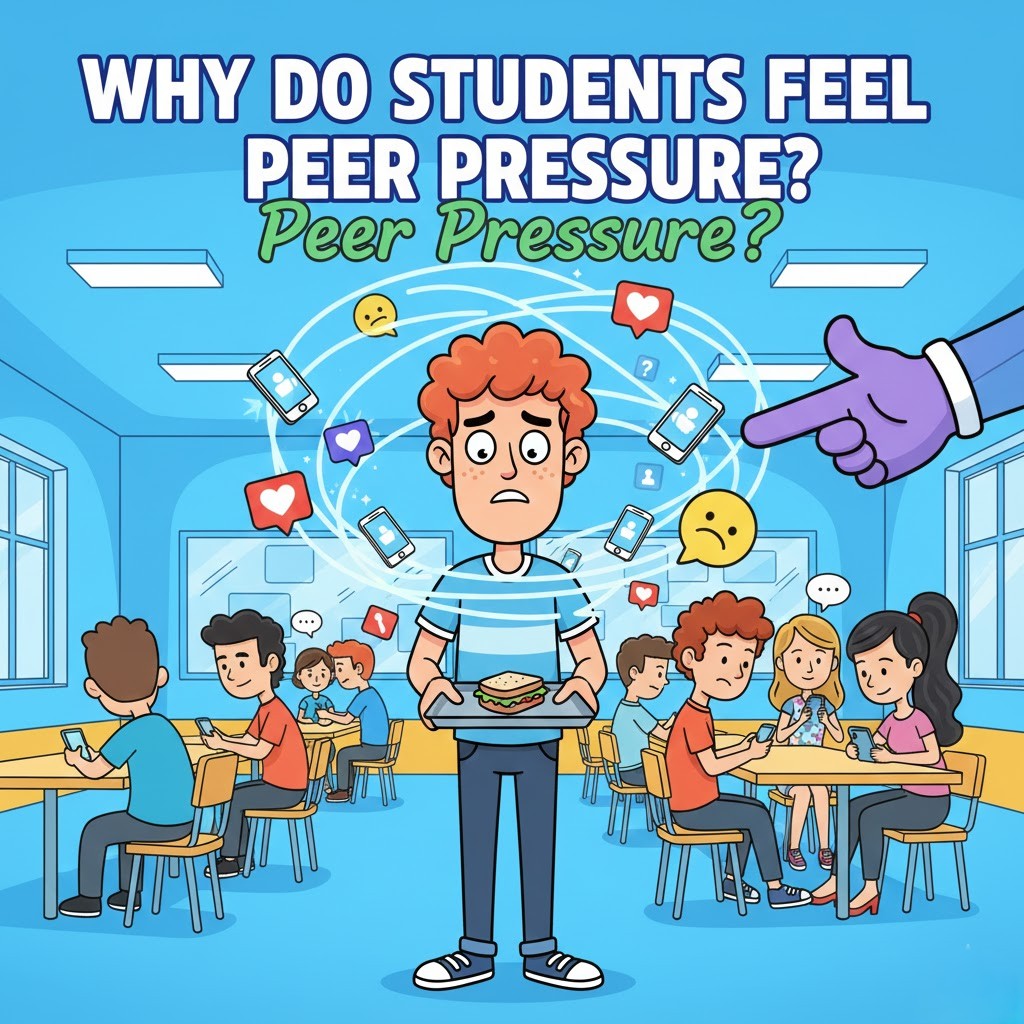
Why Do Students Feel Peer Pressure?
There are several reasons why students experience peer pressure, especially during adolescence:
- Desire to fit in: Students often want to be accepted and feel like they belong to a group.
- Fear of being left out: Nobody likes feeling excluded or ignored by friends.
- Need for approval: Many students try to look “cool” or popular to gain attention.
- Lack of confidence: Students who are unsure of themselves may find it harder to say no.
- Influence of social media: Online trends and peer comparisons can increase pressure.
Recognizing these reasons helps students understand that they are not alone in feeling this way.
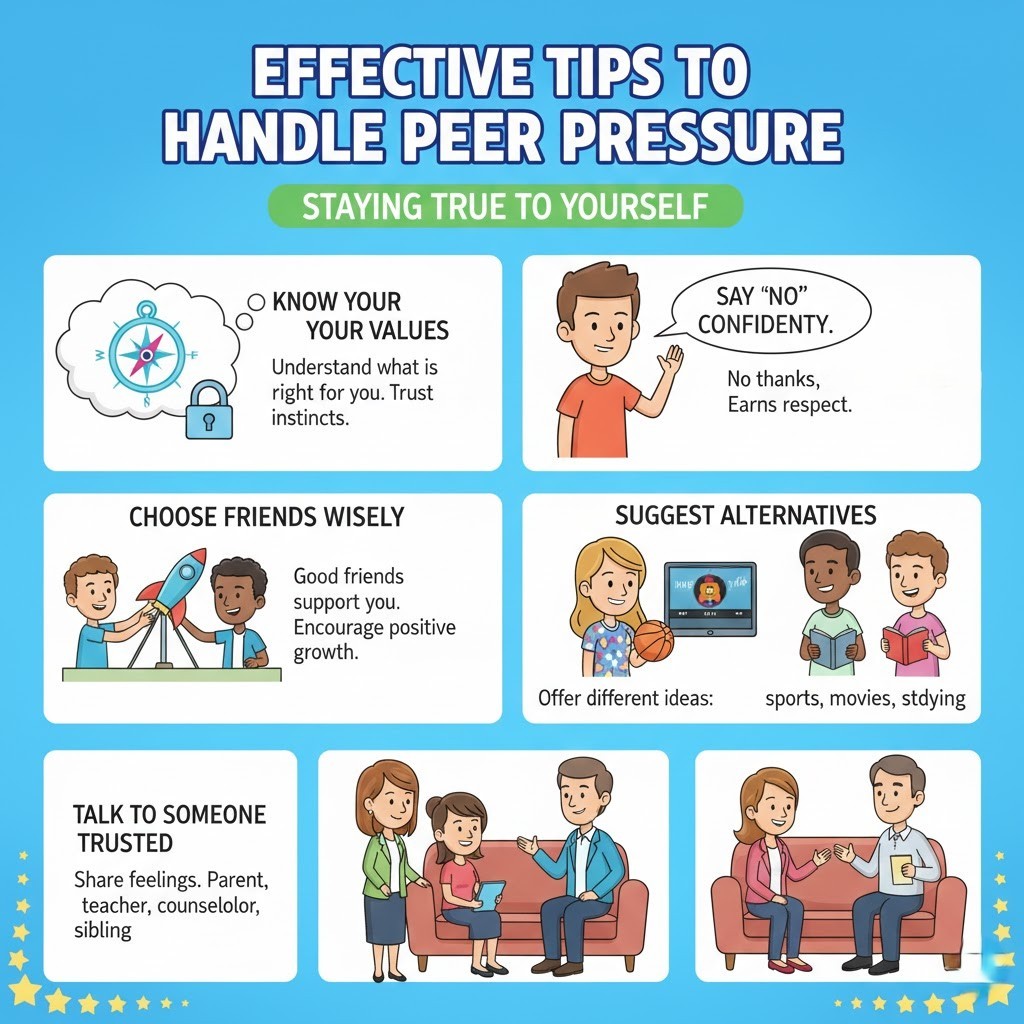
Effective Tips to Handle Peer Pressure
Handling peer pressure does not mean losing friends—it means staying true to yourself while respecting others. Here are some practical and easy tips for students:
1. Know Your Values
Understand what is right and wrong for you. When you are clear about your values, it becomes easier to make decisions. If something feels uncomfortable or wrong, trust your instincts.
2. Learn to Say “No” Confidently
You don’t need to be rude or aggressive. A simple, confident response works best.
Example: “No thanks, I’m not interested.”
Confidence often earns respect.
3. Choose Friends Wisely
Good friends support your choices and never force you into doing something wrong. Surround yourself with people who encourage positive behavior and growth.
4. Suggest Positive Alternatives
If your friends suggest something you don’t like, offer a different idea—such as playing a sport, studying together, watching a movie, or doing a creative activity.
5. Talk to Someone You Trust
If peer pressure feels overwhelming, share your feelings with a parent, teacher, school counselor, or elder sibling. Talking openly can reduce stress and help you find solutions.
The Importance of Staying True to Yourself
True confidence comes from being comfortable with who you are. Real friends will respect your decisions and accept you as you are. Trying to impress others by going against your values may lead to regret, stress, and loss of self-respect.
Final Thoughts
Peer pressure is a part of growing up, but it does not have to control your life. By understanding it, staying confident, and making smart choices, students can turn peer influence into a positive force. Remember, your character, values, and happiness matter more than temporary approval.
Be yourself. Stand strong. Choose wisely.