
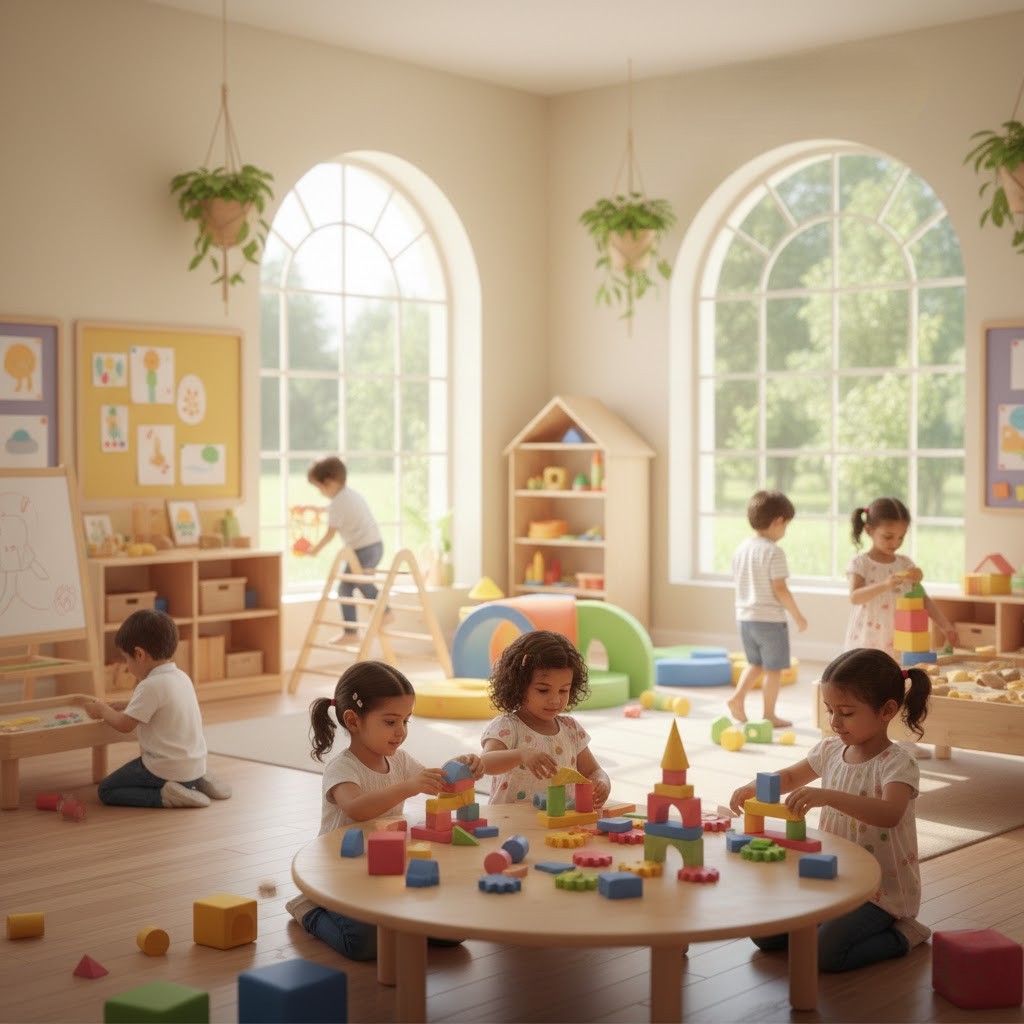
Early childhood education serves as the bedrock of lifelong learning. During these formative years, children develop fundamental physical, cognitive, and social abilities through active movement and environmental exploration. A strategically designed play school environment does more than provide fun; it plays a critical role in supporting motor skill development while fostering curiosity and self-assurance.
At Dolphin Public School, our infrastructure is thoughtfully engineered as part of a holistic development approach that merges physical activity with creativity and early literacy.
The Importance of Play-Based Learning in Early Education
Play-based learning is the most effective way for young children to acquire new skills without the pressure of a traditional academic setting. By engaging in play, children naturally:
- Strengthen core muscles and limb coordination.
- Improve balance and spatial awareness.
- Enhance brain development, which supports better focus, memory, and emotional regulation.
How Infrastructure Drives Motor Skill Development
A child-centric play school design isn’t just about aesthetics; it’s about encouraging free movement. The physical environment acts as a “third teacher” in the following ways:
1. Gross Motor Skills
Open play areas and structured zones equipped with age-appropriate climbing frames, tunnels, and balance beams help children practice running, jumping, and climbing. these activities are vital for developing large muscle groups and overall physical stamina.
2. Fine Motor Skills
Dedicated activity corners for building blocks, clay modeling, and drawing allow children to refine their “finger dexterity.” This hands-on interaction helps children gain the precise control needed for writing and other complex tasks later in life.
Fostering Creativity and Problem-Solving
An engaging environment acts as a catalyst for imagination. When children interact with diverse play elements—such as sensory tables or modular equipment—they are forced to experiment and solve simple problems. These experiences strengthen cognitive pathways, laying a robust foundation for future academic success.
Building Confidence and Social Intelligence
Play is a social endeavor. Group activities within a well-structured play area teach children the “soft skills” that are hard to learn in a textbook:
- Cooperation: Working together to build a fort or navigate a game.
- Communication: Learning to express needs and share ideas with peers.
- Confidence: As children master a new physical challenge (like the monkey bars), their self-esteem grows, creating a positive attitude toward learning in general.
Preparing for the Future: Beyond the Playground
The benefits of strong motor skills extend far beyond the early years. Children with high levels of physical coordination often find it easier to adapt to classroom routines, participate in organized sports, and engage in structured learning. By investing in high-quality play school infrastructure, we ensure children grow with the independence and readiness required for higher education.
Conclusion: A Foundation Built on Play
Quality early childhood education must prioritize a safe, engaging, and movement-friendly environment. Play school infrastructure is a vital tool in nurturing a child’s physical and mental growth.
For parents seeking a school that emphasizes holistic growth and motor skill development, choosing a play-based learning environment makes all the difference in a child’s trajectory.