
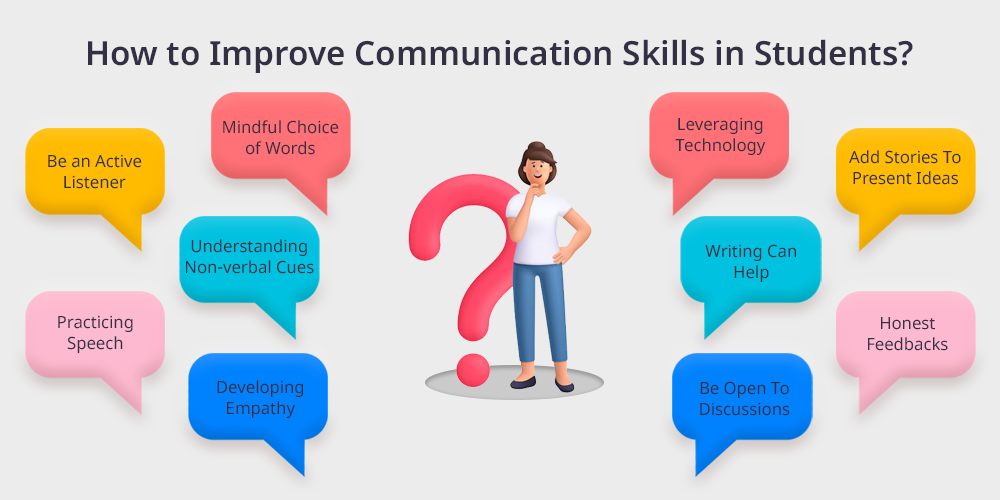
In 2026 and beyond, communication will be one of the most powerful skills a student can possess.
No matter the profession — technology, business, science, entrepreneurship, or the arts — the ability to clearly express ideas, listen actively, and collaborate effectively determines long-term success.
Academic knowledge opens doors. Communication keeps them open.
Schools must intentionally cultivate communication skills from an early age to prepare students for leadership in a fast-evolving world.
1️⃣ Encouraging Student Voice in Classrooms
Communication begins with confidence.
Students should feel empowered to:
- Share opinions
- Ask questions
- Participate in discussions
- Present ideas
When classrooms promote participation, they naturally strengthen Building Creative Confidence in Students, allowing learners to articulate original thoughts without fear.
A student who believes their voice matters becomes a stronger communicator.
2️⃣ Strengthening Critical Thinking Through Dialogue
Healthy discussions sharpen reasoning.
Through structured debates and group discussions, students learn to:
- Present arguments logically
- Defend viewpoints respectfully
- Evaluate opposing perspectives
- Adapt their thinking
This directly supports Critical Thinking & Problem-Solving Skills, as communication and reasoning are deeply connected.
Clear thinkers communicate clearly.
3️⃣ Integrating Project-Based Collaboration
Communication thrives in collaborative environments.
Through Project-Based Learning in Modern Classrooms, students:
- Divide responsibilities
- Manage timelines
- Present findings
- Work through disagreements
Team projects provide real opportunities to practice both verbal and written communication.
In professional life, collaboration is constant — schools must reflect that reality.
4️⃣ Developing Digital Communication Skills
In an AI-driven world, communication extends beyond face-to-face interaction.
Students must learn:
- Professional email writing
- Virtual presentation skills
- Responsible online communication
- Collaborative digital tools
By embedding these practices into Digital & AI Literacy in Education, schools prepare students for hybrid and remote professional environments.
Modern communication includes digital fluency.
5️⃣ Strengthening Emotional Awareness in Expression
Effective communication requires emotional intelligence.
Students must learn:
- Active listening
- Empathy
- Tone awareness
- Constructive feedback
This ties directly into developing Emotional Intelligence in Students, ensuring communication is respectful and thoughtful.
Strong communicators understand both words and emotions.
6️⃣ Fostering Confidence Through a Growth-Oriented Environment
Students often fear public speaking or presenting ideas.
By nurturing a Growth Mindset Culture, schools encourage students to:
- Practice regularly
- Learn from feedback
- Improve presentation skills
- Overcome performance anxiety
Communication improves through repetition and reflection.
When students understand that skill-building is a process, they grow more confident over time.