
Home is a child’s first and most influential classroom. For small children—typically toddlers to kindergarten age (2-6 years)—everyday interactions with parents shape their curiosity, language skills, social abilities, and love for learning. Research from child development experts shows that responsive parenting during these early years builds stronger neural connections, enhances emotional security, and prepares children for formal education. The best part? You don’t need expensive toys or structured lessons. Simple, consistent activities woven into daily life can make a profound difference.
Parents play a unique role: you’re not replacing teachers but reinforcing and extending what happens at home in a nurturing, low-pressure way. This support boosts confidence, fosters independence, and creates joyful bonding moments, as emphasized by UNICEF.
1. Make Reading a Daily Ritual
Reading aloud is one of the most powerful ways to support early literacy and brain development. It expands vocabulary, improves listening skills, and sparks imagination. Aim for 15-20 minutes daily, choosing colorful picture books with rhymes or repetitive phrases, a practice recommended by NAEYC.
- Sit comfortably together and let your child turn pages.
- Ask open-ended questions like “What do you think happens next?” or “How does the character feel?”
- Point to pictures and describe them to build connections between words and objects.
Even if your child isn’t reading yet, this habit lays the foundation for phonics and comprehension later, according to insights shared by Edutopia.
2. Turn Everyday Routines into Talking Opportunities
Language development thrives on conversation. Narrate your day, describe actions, and encourage your child to respond.
- During meals: Talk about colors, shapes, or tastes of food (“This apple is red and crunchy!”).
- Bath time or dressing: Name body parts, colors of clothes, or sequences (“First socks, then shoes”).
- Errands: Point out signs, vehicles, or people, asking “What sound does a car make?”
This “parentese”—exaggerated, sing-song speech—captures attention and helps children process language faster, as supported by research from the American Psychological Association.
3. Encourage Play-Based Exploration
Play is how young children learn best. Provide open-ended materials like blocks, crayons, or household items for imaginative play, an approach backed by Harvard research on play.
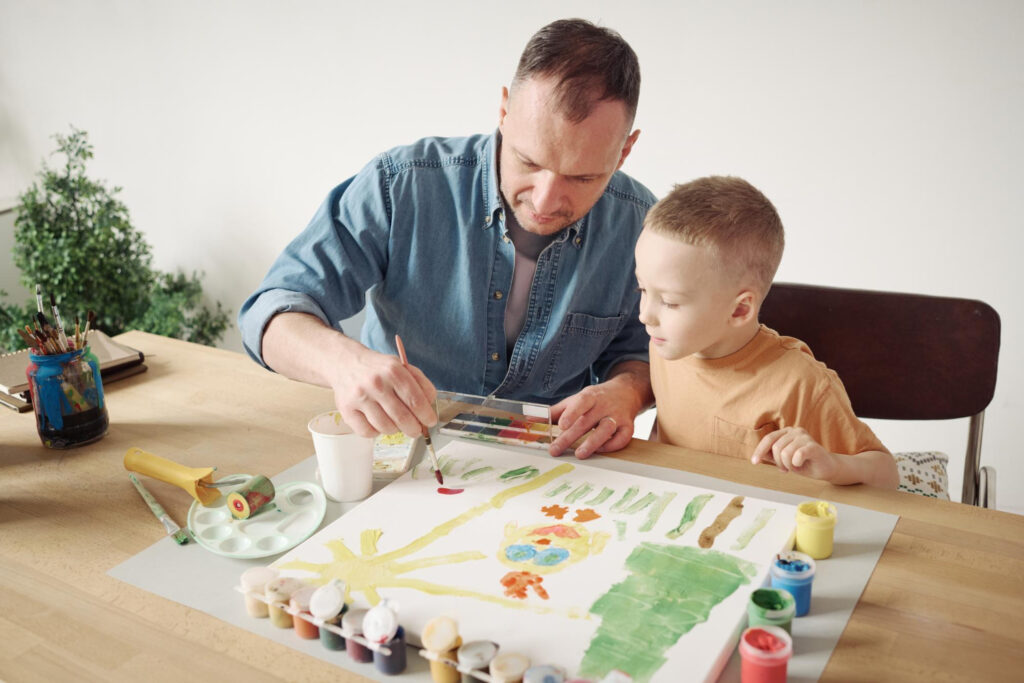
- Set up simple crafts: Finger painting, playdough shapes, or collage with safe recyclables.
- Puzzles and sorting games: These build problem-solving, fine motor skills, and patience.
- Role-play: Use dolls, kitchen sets, or dress-up to develop empathy and social understanding.
Join in without directing—follow your child’s lead to boost creativity.
4. Incorporate Learning Games and Movement
Make math and science fun through games:
- Counting: Stairs, toys, or snacks (“How many spoons do we need?”).
- Sensory play: Water pouring, rice bins, or nature collections.
- Indoor/outdoor games: Simon says for listening, or scavenger hunts for observation.
Physical activity supports cognitive growth, so dance to music, play chase, or explore parks, aligning with guidance from the World Health Organization.
5. Create a Supportive Learning Environment
Designate a cozy corner with accessible books, art supplies, and quiet space. Limit screen time to high-quality, interactive content (if any), prioritizing real-world experiences, as advised by APA.
- Establish routines: Consistent bedtime reading or morning playtime signals learning is valued.
- Praise effort: “You worked hard on that tower!” builds growth mindset.
- Model curiosity: Show enthusiasm for learning new things yourself.
6. Balance Structure with Flexibility
While routines help, follow your child’s interests. If they’re fascinated by animals, dive into related books or visits. Observe cues—if they’re tired, switch to cuddles over activities.
Supporting learning at home strengthens your bond and equips your child with essential skills. Start small, be patient, and enjoy the process. These moments not only prepare them for kindergarten but also instill a lifelong passion for discovery, a goal shared by global education frameworks from the OECD. Learn more about Parenting & Kindergarten Education.
What home activities have worked best for your little one? Share in the comments—we’d love to hear your experiences!