
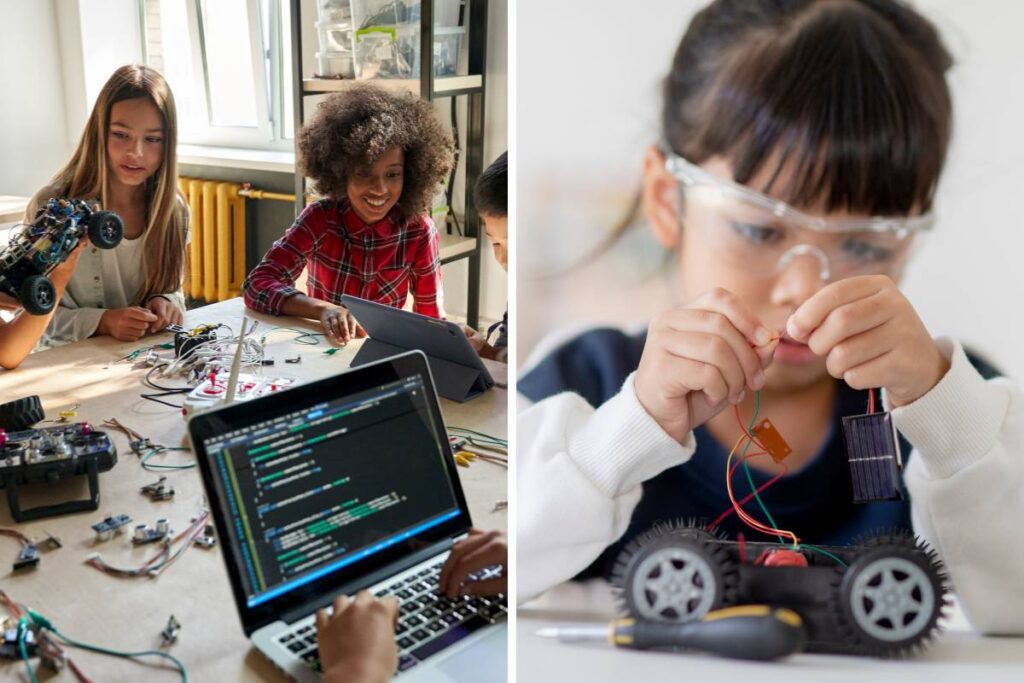
By 2026, artificial intelligence will not be a futuristic concept — it will be part of everyday life.
From smart assistants to automated systems, AI is transforming industries, communication, and problem-solving. The question is no longer whether students should learn about technology — but how deeply they understand and use it.
Digital literacy today goes beyond basic computer skills. It includes ethical awareness, critical evaluation, and creative application of AI tools.
Schools must prepare students not just to consume technology — but to lead with it.
1️⃣ Moving From Passive Consumption to Active Creation
Many students are digitally active but not digitally skilled.
Scrolling, liking, and browsing are not the same as building and designing.
Schools must encourage students to:
- Create digital content
- Design presentations
- Explore basic coding
- Use AI tools responsibly
- Develop multimedia projects
This approach aligns with Project-Based Learning in Modern Classrooms, where technology becomes a tool for innovation rather than distraction.
When students create using technology, confidence and competence grow together.
2️⃣ Strengthening Critical Thinking in the Digital Age
AI-generated information is powerful — but it must be evaluated carefully.
Students need to learn:
- How to verify sources
- Recognize bias
- Question algorithmic outputs
- Differentiate fact from misinformation
Embedding these skills strengthens Critical Thinking & Problem-Solving Skills, ensuring students make informed decisions in a data-driven world.
Technology without critical thinking can lead to misinformation. Together, they build responsible digital citizens.
3️⃣ Encouraging Creative Confidence Through Digital Expression
Digital tools open doors for creative exploration.
Students can:
- Produce short films
- Design graphics
- Develop podcasts
- Build simple applications
- Experiment with AI-assisted design
By integrating digital creativity, schools further support Building Creative Confidence in Students.
When learners see their ideas transform into digital outputs, their belief in their abilities expands.
4️⃣ Teaching Ethical & Responsible Technology Use
With greater access comes greater responsibility.
Students must understand:
- Digital privacy
- Online safety
- Cyber ethics
- Responsible AI usage
- Respectful online communication
This connects directly with nurturing Emotional Intelligence in Students, as empathy and awareness are essential in digital interactions.
Technology education is not just technical — it is ethical.
5️⃣ Promoting Adaptability & a Growth Mindset
Technology evolves rapidly. Skills learned today may change tomorrow.
By fostering a Growth Mindset Culture, schools help students understand that continuous learning is necessary in the digital era.
Students who:
- Adapt quickly
- Stay curious
- Embrace change
- Learn new tools confidently
Will thrive in AI-integrated workplaces.
6️⃣ Building Communication & Collaboration in Digital Spaces
Modern collaboration often happens online.
Students should practice:
- Virtual teamwork
- Digital presentations
- Collaborative online research
- Clear written communication
Strengthening these skills aligns with Building Communication Skills from an Early Age, preparing students for remote and hybrid professional environments.