
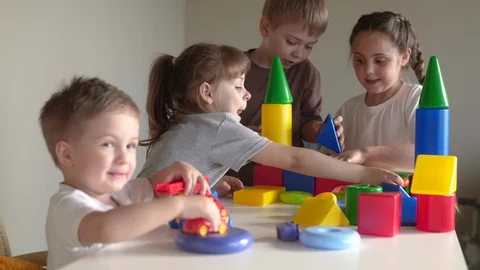
In the Indian education system, early childhood education sets the stage for a child’s lifelong learning journey. Parents often encounter terms like Nursery, LKG (Lower Kindergarten), and UKG (Upper Kindergarten), which represent progressive stages of pre-primary schooling. These levels focus on holistic development—cognitive, social, emotional, and physical—through age-appropriate activities, gradually shifting from pure play to structured learning.
Understanding these differences helps parents choose the right stage, set realistic expectations, and support their child’s transition to formal schooling in Class 1.
Typical Age Groups
Age criteria vary slightly by school, state guidelines, and board (e.g., CBSE, ICSE, or state boards), but general standards as of 2026 are:
- Nursery: 3 to 4 years (child should be 3+ by March/June of the admission year).
- LKG (Lower Kindergarten): 4 to 5 years.
- UKG (Upper Kindergarten): 5 to 6 years.
Many schools require the child to complete the minimum age by March 31 or June 1. Always check specific school policies, as some include a Playgroup or Pre-Nursery for 2-3 year olds, in line with guidance from UNICEF.
Curriculum and Learning Focus
Each stage builds on the previous one, aligning with developmental milestones supported by research from the Harvard Center on the Developing Child.
Nursery: Play-Based Foundation
This introductory level prioritizes socialization and basic skills through fun. The curriculum is almost entirely play-oriented, with little formal academics.
- Recognizing colors, shapes, animals, and everyday objects.
- Basic manners, sharing, and group play.
- Sensory activities, rhymes, stories, and music.
- Gross and fine motor skills via outdoor play, dancing, and crafts.
No writing or structured reading—focus is on exploration and confidence-building, a method endorsed by NAEYC.
LKG: Introduction to Structured Learning
LKG bridges play and academics, introducing foundational concepts gently.
- Alphabet recognition, phonics, and simple word formation.
- Numbers 1-50, counting, basic shapes, and patterns.
- Colors, opposites, and environmental awareness (e.g., seasons, community helpers).
- Pre-writing skills like tracing and patterns.
- Social skills through group activities and storytelling.
Activities remain playful but include more teacher-guided sessions, reflecting early learning practices discussed by Edutopia.
UKG: Preparation for Primary School
UKG strengthens skills for a smooth Class 1 transition, with more structure.
- Reading simple words/sentences, basic writing (letters, names, short words).
- Numbers 1-100, simple addition/subtraction, concepts like time and money.
- Hindi/regional language introduction, general knowledge.
- Logical thinking, puzzles, and basic science experiments.
- Independence in routines and group projects.
Play continues, but desk-based activities increase, supporting school readiness highlighted by the World Bank.
Key Differences at a Glance
- Approach: Nursery is 90% play; LKG balances play with basics (60-40); UKG shifts toward structured learning (50-50).
- Daily Activities: Nursery features free play, songs, and crafts; LKG includes circle time, worksheets, and themes; UKG adds reading circles, math games, and assessments.
- School Readiness: Nursery builds comfort with separation and routines; LKG fosters listening and following instructions; UKG develops pencil grip, concentration, and basic academics.
- Assessment: Informal observation in Nursery/LKG; gentle evaluations in UKG.
Why the Progression Matters
These stages follow child development science: younger children learn best through sensory play, while older preschoolers handle structure. Skipping stages (e.g., direct LKG entry) can cause adjustment issues, though some children adapt well, as noted in developmental psychology insights from the American Psychological Association.
Quality schools (CBSE-affiliated or Montessori-inspired) emphasize holistic growth, including emotional intelligence and creativity alongside academics, aligning with global education perspectives from the World Economic Forum.
Choosing the right stage depends on your child’s birthday, readiness, and school cutoffs. Visit schools, observe classes, and talk to teachers for the best fit. Learn more about Parenting & Kindergarten Education.
Have you navigated these admissions recently? Which stage is your child in, and what differences have you noticed? Share your experiences in the comments!